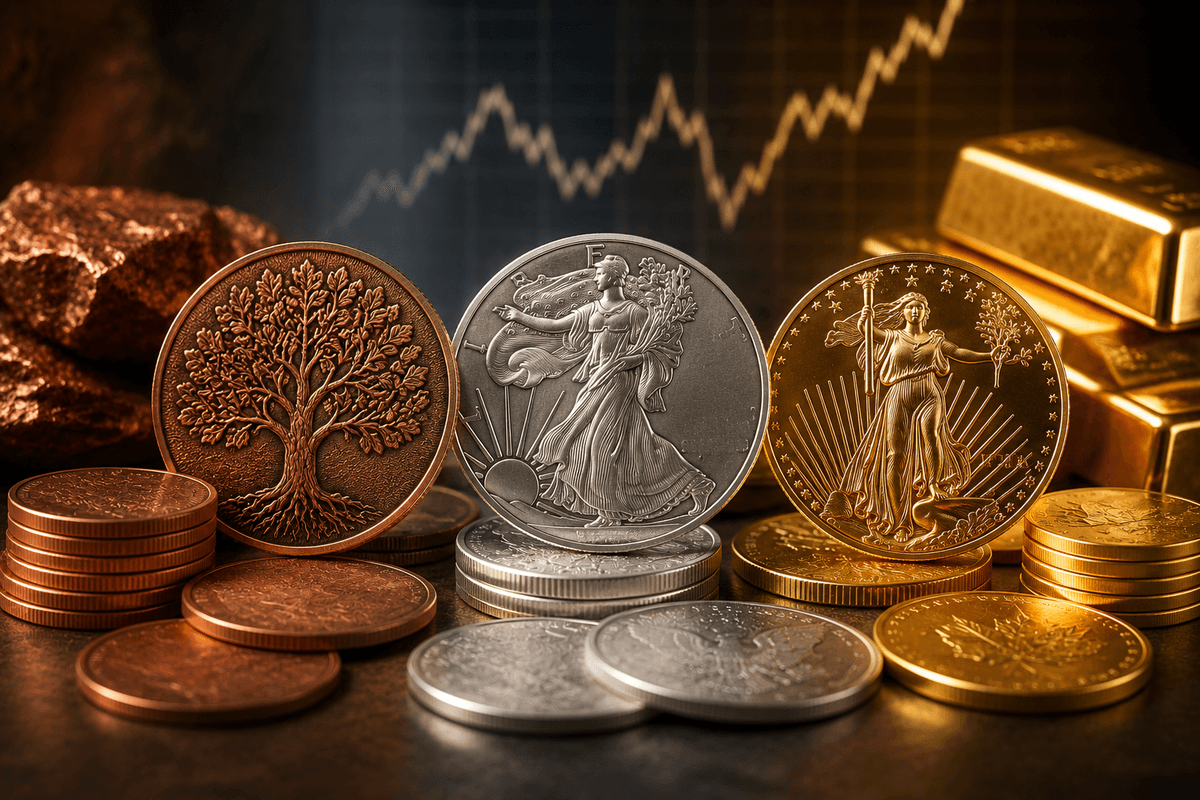
Copper, silver, and gold each occupy a different place in the minds of collectors and stackers. Gold is the ultimate store of value. Silver is the workhorse of the precious metals community. And copper? Copper is the underdog — low-cost, tactile, art-forward, and increasingly the entry point for a new generation of collectors. But does it make financial sense to stack copper rounds? This guide breaks down the real investment case for copper coins, how copper compares to silver and gold, and when limited-edition copper rounds actually appreciate in value.
Copper rounds can be a sound investment — if you understand what you're buying.
Raw copper melt value is low. The investment case for copper is not about spot price — it is about collector premiums, mintage scarcity, and community demand . Limited-edition .999 fine copper rounds from recognized private mints with consistent sellout records trade significantly above melt value and often appreciate further on the secondary market.
For stackers entering precious metals on a budget, copper is also the most accessible starting point — with lower barriers to entry than silver or gold and a passionate, growing collector community.
The Three Metals: What Each One Actually Is
Before comparing copper, silver, and gold as investments, it helps to understand what each metal actually represents in the context of collecting and stacking.
Copper
The entry-level precious metal. Low spot price, high collector community passion. Investment value driven by design quality, mintage scarcity, and community demand rather than melt value.
Silver
The stacker's workhorse. Accessible price point, strong industrial demand, liquid secondary market. Holds melt value well and appreciates with commodity price movements.
Gold
The wealth preservation standard. Highest barrier to entry, strongest store-of-value properties, globally recognized liquidity. Collector premiums on limited editions significant.
Copper vs Silver vs Gold: Full Investment Comparison
This table compares all three metals across the factors that matter most to collectors and stackers — from spot price and entry cost through to collector premium potential and community liquidity.
Important Context on Copper Premiums
The "10–50× melt" premium figure for limited edition copper refers to percentage above raw copper spot, not absolute dollar value. A 1 oz copper round with ~$0.05 melt value selling for $5–$10 is trading at 100–200× spot — but that is still only $5–$10 total. The investment case for copper is about percentage appreciation and collector demand , not dollar magnitude. Keep this distinction in mind when comparing copper to silver or gold.
The Real Investment Case for Copper: It Is Not About Melt Value
The most common mistake people make when evaluating copper as an investment is applying the same framework they use for gold or silver. With gold, you buy because the metal itself holds value. With silver, you buy because it is an accessible commodity with strong industrial demand. Neither of these arguments applies to copper in the same way.
The copper spot price is so low — roughly four to five cents per ounce — that raw melt value is essentially irrelevant to the collector premium on a quality copper round. A 1 oz .999 fine copper round retailing for $4–$8 is already trading at 80–160× its melt value. You are not buying copper for the metal. You are buying it for the design, the mintage scarcity, and the community .
Collector premium = design quality + mintage scarcity + mint reputation + community demand. A generic copper round from an unknown source trades near spot. A limited-edition copper round from a recognized private mint — with dramatic die-struck artwork, a mintage of 1,000–2,000, a serialized COA, and a community that tracks releases — trades at a sustained premium and often appreciates further on secondary markets.
What Actually Drives Copper Round Value
Mintage scarcity
The fewer coins in a series, the more each one is worth to collectors who want a complete set. Hart Strike Mint limits copper series to 1,000–2,000 coins per design — creating genuine scarcity rather than artificial restriction. When every launch sells out within hours, the secondary market reflects real demand, not manufactured urgency.
Design quality and theme
Die-struck high-relief artwork separates collectible copper rounds from commodity copper. Dramatic themes — pop art, mythology, pirates, steampunk, dragons — attract buyers who are as interested in the art as the metal. Coins that tell a story or belong to a coherent visual series command stronger secondary market premiums than generic rounds with minimal design investment.
Mint reputation and community
Rounds from private mints with established collector communities — active Reddit followings, Whatnot auction presence, Facebook groups, and eBay secondary market activity — hold value better than rounds from unknown sources. Community creates liquidity. Liquidity sustains and grows premiums over time.
Series completeness
Collectors who begin a series feel motivated to complete it. A 4–5 coin series at 1,500 pieces per design creates a completion dynamic that drives demand for earlier releases as later designs are announced. Complete sets often trade at a premium above the sum of individual coin values — particularly when a series is permanently retired with no additional strikes.
Finish and packaging quality
Antique finish, UV colorization, serialized edge numbering, certificates of authenticity, and premium display cards all add perceived and realized value above a raw struck coin. Collectors buying for investment as much as enjoyment pay more for complete presentation packages that protect and display their holdings.
Copper vs Silver: A Direct Comparison for Stackers
The most common question among collectors entering precious metals is whether to start with copper or silver. Both are accessible. Both have active collector communities. Both can appreciate above spot. The choice depends on what you value most.
✓ Copper Advantages
- Much lower entry price — build a collection for $20–$50
- Higher percentage premium potential on limited editions
- Art-driven community with passionate following
- Dramatic high-relief designs more common at this price point
- Lower financial risk per piece while learning the market
- Completion dynamics in series drive sustained demand
- Industrial demand (EVs, renewables) supports long-term copper commodity market
✗ Copper Limitations
- Melt value is negligible — almost entirely premium-driven
- Smaller, more niche secondary market than silver
- Generic copper rounds have almost no investment value
- Less recognized globally as a store of value
- Community liquidity is concentrated on specific platforms
- Value entirely dependent on design quality and mint reputation
Most serious collectors hold both copper and silver . Silver provides the wealth-preservation foundation — a commodity with real melt value, industrial demand, and broad market liquidity. Copper provides the collecting enjoyment — limited-edition art pieces with community-driven value, accessible price points, and the genuine excitement of a sellout launch and rising secondary market prices. They are not competing investment strategies. They are complementary.
When Copper Rounds Appreciate: The Conditions That Drive Value
Not all copper rounds appreciate. Generic bulk copper rounds with no design investment, no mintage limits, and no community following trade at or near retail with no secondary market premium. The appreciation story in copper is specific and conditional.
These are the conditions under which collectible copper rounds have historically demonstrated price appreciation on secondary markets:
- The series sold out quickly. Fast sellouts signal genuine demand that outpaced supply — the fundamental driver of price appreciation. Hart Strike Mint launches sell out within hours, which creates an immediate secondary market for buyers who missed the release.
- The mint has a recognized community. Reddit communities, active Facebook groups, and Whatnot auction followings create ongoing liquidity. Without community, secondary market buyers are hard to find regardless of how good the coin is.
- The mintage was genuinely limited and is not restruck. Appreciation evaporates if a mint restikes a "limited edition." Permanent retirement of dies after the original run is what makes scarcity real.
- The design belongs to a series. Later coins in a series drive retroactive demand for earlier pieces. Collectors who discover a series late often pay secondary premiums to acquire back issues and complete their sets.
- The coin is in original condition with packaging. Scratched, fingerprinted, or unpackaged coins trade at a discount. Coins in original capsules with their COA cards and display packaging trade at full or above-issue premiums.
Copper's Industrial Demand: The Long-Term Commodity Story
There is a separate — and genuinely compelling — long-term investment story in copper that sits beneath the collector premium discussion. It is the commodity story.
Copper is a critical industrial metal. It is the primary conductor in electrical wiring, electric vehicle motors and charging infrastructure, solar panel systems, wind turbines, and the broader renewable energy buildout. As global electrification accelerates, copper demand is projected to grow significantly over the next decade while new mine supply faces geographic and regulatory constraints.
Copper Commodity Demand Drivers
- Electric vehicles use 3–4× more copper than internal combustion engine vehicles
- Solar and wind energy infrastructure is copper-intensive
- Global grid modernization requires hundreds of billions in new copper infrastructure
- Major copper mines face aging reserves and difficult new development timelines
- Analyst forecasts for structural copper supply deficits are broadly shared across major banks
Does this commodity story directly translate to the value of a .999 fine copper round? Not in a direct 1:1 way — collectible copper rounds trade on design and community value, not commodity price. But a rising copper spot price does lift the perceived value floor of the metal and can attract new collectors from the investment community, expanding the addressable market for copper collectibles.
What Kind of Copper Investor Are You?
There are three distinct types of copper buyers in the market today, each with a different relationship to value and appreciation.
The Three Copper Buyer Profiles
Hart Strike Mint's Copper Investment Philosophy
Hart Strike Mint builds copper collectibles for all three of these buyer profiles — but the mint's production philosophy is built around the conditions that drive genuine value appreciation.
Every Hart Strike Mint copper release follows these principles:
- Genuine mintage limits. 1,000–2,000 coins per design. Dies are retired after the original run — no restikes, no second editions.
- Series structure. 4–5 coin series create completion dynamics that sustain collector demand across the full series lifecycle.
- High-relief die-struck artwork. Original dramatic designs across themes that attract both art collectors and precious metals stackers.
- Community-first distribution. Sold through Whatnot live auctions, eBay, and direct collector channels — platforms where community drives price discovery and creates organic secondary market activity.
- .999 fine purity. Every copper coin is 99.9% pure copper — collector grade, not industrial grade.
The result is a copper product that has demonstrated consistent sellout velocity across 40+ completed projects — and a growing secondary market presence in the collector community.
Final Verdict: Is Copper Worth Buying?
Copper is not a substitute for silver or gold in a precious metals portfolio. If you are looking purely for wealth preservation, buy silver or gold. The melt value case for copper is too weak to support that thesis.
But if you are building a collection — if you want the pleasure of owning struck metal art, the excitement of limited releases, the community of fellow collectors, and the genuine possibility that a sold-out series appreciates meaningfully above what you paid — then copper is not just worth buying. It may be the most interesting and accessible place to start.
The key is being intentional: buy limited editions from recognized private mints with active communities and genuine mintage controls . Skip the generic bulk rounds with no design investment and no scarcity story. The difference between a copper round that appreciates and one that sits at retail indefinitely is entirely about the quality of what you buy and who made it.
Limited edition copper coins — built for collectors who understand value.
1 oz and 5 oz .999 fine copper rounds in dramatic limited series. 1,000–2,000 per design. Every launch sells out in hours. Over 40 completed projects.
Frequently Asked Questions
Investment Disclaimer: This article is for educational and informational purposes only and does not constitute financial or investment advice. Precious metals — including copper, silver, and gold — carry investment risk. Past performance of collectible premiums does not guarantee future results. Consult a qualified financial advisor before making investment decisions.
Continue exploring
More in Custom Gold Bars & Fractional Projects.
Browse the custom gold bars & fractional projects topic hub for related journal entries and a project-oriented starting point.
A project conversation
Discuss a related custom project
If this topic connects to a collector-led coin, round, bar, or medallion idea, share the purpose, preferred format, and any artwork or reference material for a project review.
Start a project review