A useful custom mint quote request is a short, factual project snapshot: state the purpose, design direction, form or material direction if known, approximate quantity range, artwork status, and a reliable contact. You do not need every answer before making contact. Clear knowns, plainly marked unknowns, and useful references give a reviewer a place to begin.
Treat the request as an assessment brief, not a production order or price negotiation. It shows what you are trying to make, what already exists, and which details need follow-up. For broader commission context, start with custom project planning; this guide stays focused on the information that makes an initial quote request easier to review.
Start with the piece’s role
Open with one or two sentences that say why the piece exists. Is it a commemorative object, a collector-focused concept, a recognition item, or a collaboration? A reviewer can read the same sketch differently when its audience and context are clear. This prevents the request from becoming a list of disconnected preferences.
Add only the context that affects the design: who will receive the piece, whether it is a single design or part of a connected concept, and any wording or theme that must be preserved. The useful detail is what explains the desired mood, layout, or emphasis.
- A one-sentence purpose statement
- The intended audience or occasion
- Any theme, message, or visual element that cannot change
Describe the object in practical terms
Describe the kind of piece in ordinary language. You may have a round, bar, medallion, or coin-like layout in mind; if not, explain what the artwork needs to do. A circular emblem, a long inscription, or a horizontal image can be more useful than premature terminology. The piece types and layouts page can offer a visual starting vocabulary.
Include a material preference, general size or weight direction, and approximate quantity only when they matter to the concept. Treat each as a preference, range, or open question rather than an assumed specification.
- Preferred form or a description of the desired layout
- Material direction, if known
- Approximate dimensions or weight direction, if relevant
- A realistic quantity range or a note that quantity is still open
Attach artwork and label what it is
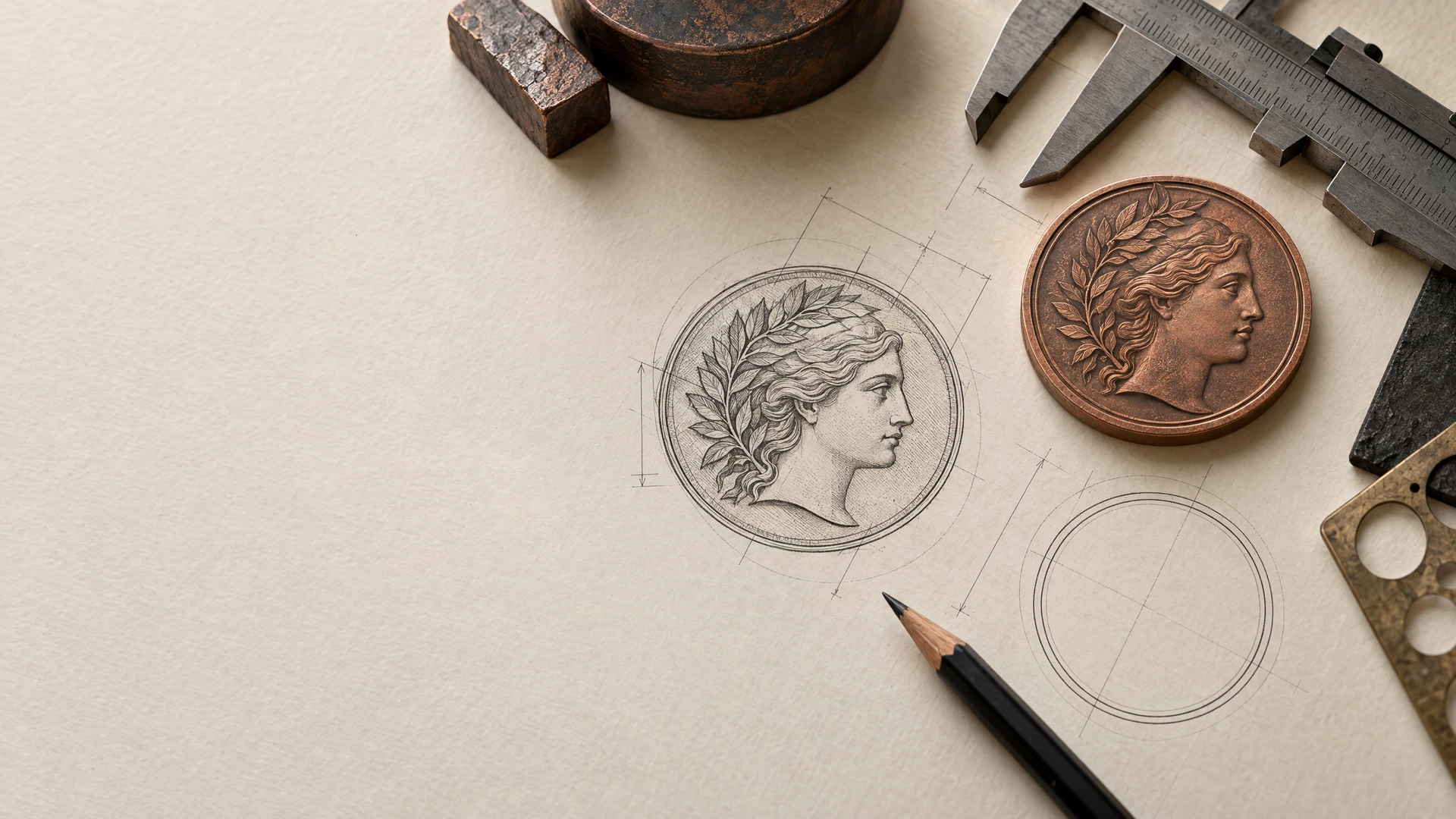
Send the strongest material you have, even if it is not finished artwork. A vector logo, original illustration, rough sketch, annotated screenshot, text copy, or a small set of visual references can clarify the request. Put filenames in the message and say what each file represents. A reviewer should not have to guess whether an image is proposed artwork, a mood reference, or a logo that must remain unchanged.
Avoid a large, unexplained folder or a stream of links. Select the references that establish visual direction, point out the relevant detail, and explain what should not be copied. Paste any inscription into the request as editable text as well as showing it in an image.
- Finished artwork, if available, with its original file type noted
- Reference images with a short explanation of their relevance
- Exact inscriptions, dates, names, and symbols in plain text
- A note identifying artwork that is exploratory rather than final
Separate finished art from a design direction
A finished logo file and a visual idea solve different problems. A finished file identifies fixed elements; a reference collage communicates tone, composition, or subject matter. If you expect help refining the design, say so rather than presenting a concept image as production-ready art.
Flag any flexible element. The central image may be settled while border text is not, or the subject may be fixed while the layout is open. That directs attention to the questions that need review.
Make rights and approvals visible
For every supplied logo, illustration, photograph, character, seal, or other recognizable material, identify the source and the person authorized to approve its use. The U.S. Copyright Office notes that an owner has exclusive rights to reproduce and adapt a work, and using a work you did not create may require permission or a license unless a legal limitation applies. Include any relevant permission record instead of assuming that an online image may be reproduced. This is a practical intake step, not legal advice. Copyright Office guidance on obtaining permission explains the general process.
Do the same for names and logos. The USPTO explains that a name or logo used to advertise a business may be a trademark, so state whether the mark is yours, belongs to a collaborator, or is used with documented approval. If ownership is unclear, say so before artwork is treated as final. USPTO trademark basics offers a useful introduction.
- The owner or authorized contact for each third-party element
- Whether written permission or a license exists and can be shared
- Who has authority to approve artwork, wording, and any later changes
End with the questions you need answered
End with a small set of focused questions: whether the design direction is clear enough for review, which details matter most, or whether the layout raises a practical concern. Keep them centered on the submitted concept.
Name one decision-maker and provide an email address or preferred reply channel. If several people are involved, identify the person consolidating feedback.
- Your preferred response method
- The best contact for follow-up questions
- Two or three specific questions about the submitted concept
Frequently asked questions
Do I need finished artwork before requesting a custom mint quote?
No. A clear concept, a logo, a sketch, reference images, or exact wording can be enough for an initial assessment. Label what is final, what is a reference, and what still needs development so the request is not mistaken for completed art.
Should I include a quantity if I have not decided one yet?
Include an approximate range if you have one. If you do not, say that quantity is still open and explain the intended use of the piece. A range gives context without treating an early estimate as a commitment.
Can I include a logo or image I found online?
Only submit material you own or are authorized to use, and identify its source and permission status. An online location does not by itself establish permission to reproduce the work. If rights are uncertain, seek appropriate advice before treating the material as approved.
What is the most useful way to send reference images?
Send a small, labeled set and add one sentence explaining what each reference contributes: the composition, typography, subject, or overall mood. Also say which parts are not intended to be copied. This gives the reviewer direction without confusing reference material with final artwork.
A project conversation
Have the essentials gathered?
When you can summarize the purpose, share the best available artwork or references, and identify any open questions, you are ready to request a focused review. Use contact us to start a project conversation with the material you have.
Start a project reviewClosing perspective
The best custom mint quote request is not the longest one. It gives the project a purpose, describes the object in practical terms, separates firm decisions from open questions, and makes the artwork and rights situation easy to understand.
Before sending, read it once from the reviewer’s perspective: Could someone tell what the piece is for, what is attached, who can approve it, and what you need to know next? If the answer is yes, the request is ready for a useful first conversation.