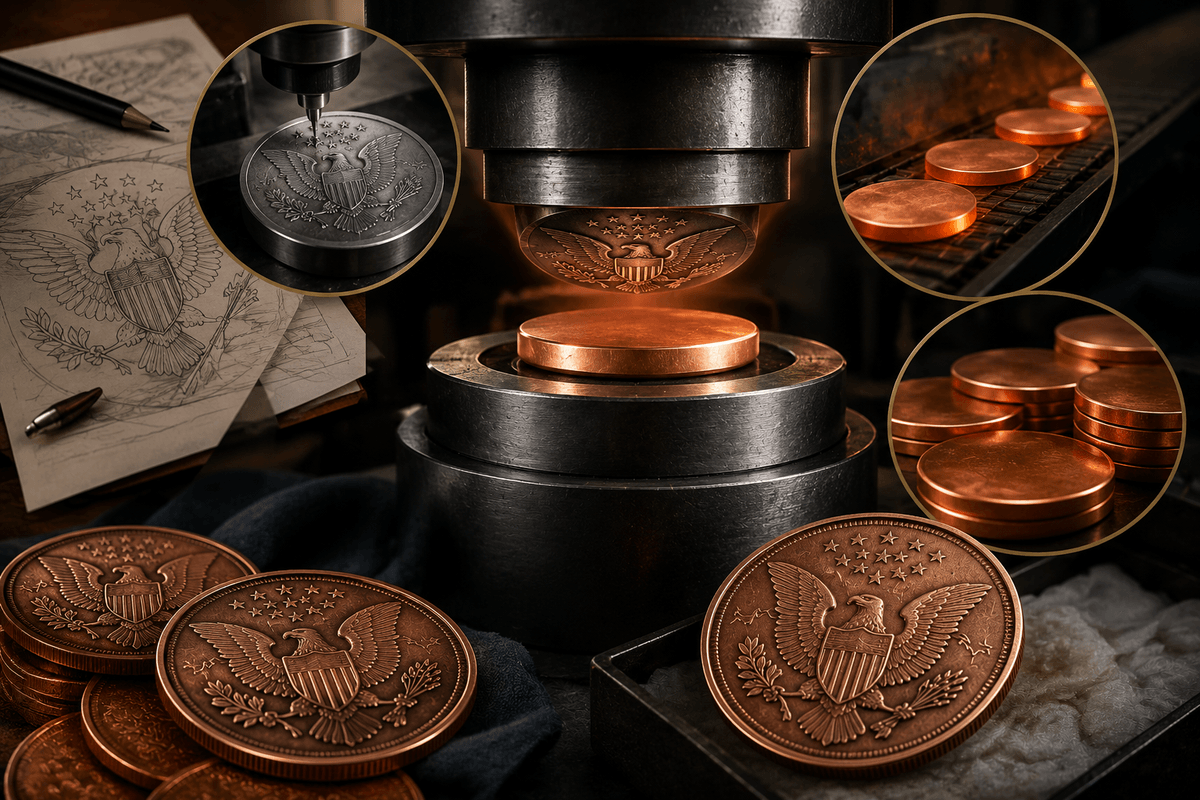
It's one of the most common questions in the coin collecting and custom minting world — and one that gets a surprisingly vague answer from most sources. So let's settle it clearly: yes, you can legally produce metal coins, rounds, and tokens in the United States. But the legality depends entirely on what you make, how it's designed, and what it's intended to do. This guide explains exactly where the legal line is, what private mints are permitted to produce, and how Hart Strike Mint operates fully within US law.
Quick Answer
Yes — private mints can legally produce metal rounds, tokens, medals, and commemorative coins in the United States.
The law prohibits making fraudulent imitations of US government legal tender — not the production of original collectible metal rounds. As long as a privately minted piece carries no denomination implying currency status, does not imitate existing US coins, and is not intended to deceive anyone into accepting it as official money, it is legal to produce and sell.
Hart Strike Mint's custom copper rounds, silver rounds, and gold bars are all produced under this framework — original collectible pieces with no legal tender status.
The Law That Governs Private Coin Making in the USA
To understand what private mints can and cannot do, you need to know the two federal statutes that govern coin production in the United States.
Prohibits falsely making, forging, counterfeiting, or altering any coin resembling a coin of the United States or of a foreign country. This statute targets counterfeiting — producing imitations of existing government-issued coins designed to deceive.
Prohibits making, uttering, or passing any coins of gold, silver, or other metal intended to be used as current money . The critical phrase here is "intended to be used as current money" — meaning intended to circulate as legal tender. Collectible rounds and tokens are not current money and are not prohibited by this statute.
Neither statute prohibits producing original metal rounds, collectible tokens, challenge coins, medals, or commemorative pieces that are clearly not designed to pass as government-issued legal tender currency.
The private minting industry in the United States has operated for well over 150 years on this legal foundation — producing silver rounds, copper rounds, gold bars, challenge coins, commemorative medals, and custom collectibles entirely within the law.
The Single Most Important Legal Distinction: Coin vs Round
The entire legal framework for private minting rests on one foundational distinction that every collector, dealer, and custom coin buyer should understand.
This distinction is not merely semantic. It is the legal basis that separates a collectible copper round from a counterfeit cent — and it is why the US private minting industry is both legal and thriving.
What Private Mints Can Legally Do
Within the boundaries established by federal law, private mints in the United States have broad freedom to produce struck metal products. Here is what is clearly permitted.
Metal rounds with no denomination
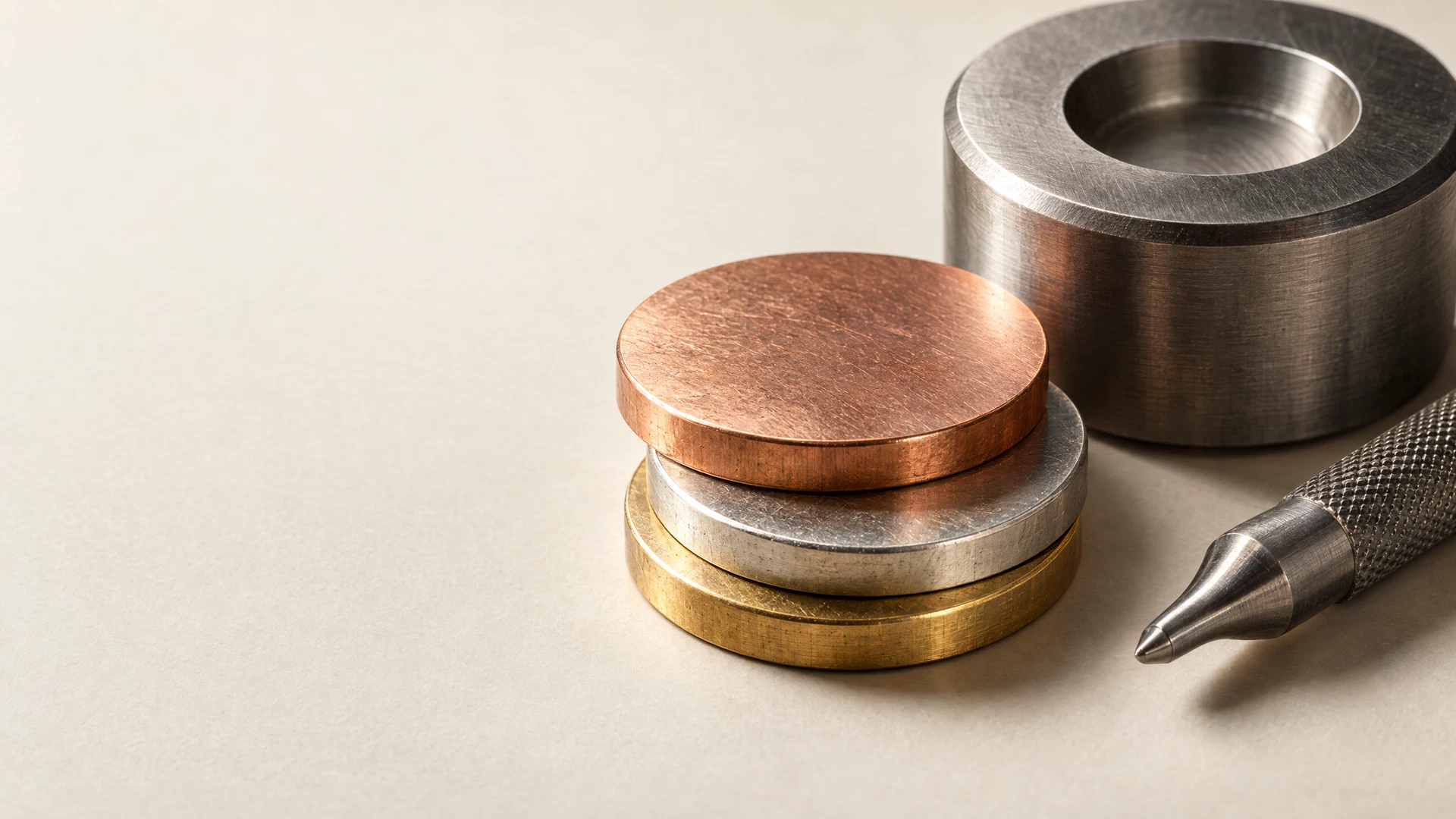
Privately minted rounds in copper, silver, gold, brass, or any other metal are legal when they carry no face denomination implying currency status. Rounds are sold by weight and collectible value — not as money.
Original custom designs and artwork
Private mints can create any original artwork for their rounds and tokens — including pop art, mythology, historical themes, fantasy, and branded IP designs. The restriction is against imitating existing government coin designs , not against original creative work.
Challenge coins and corporate tokens
Challenge coins, military commemoration coins, corporate award tokens, and organizational recognition pieces are entirely legal. They carry no denomination, are not intended to circulate as currency, and represent one of the most established segments of the private minting industry.
Commemorative medals and collectible series
Commemorative medals honoring people, events, places, and themes have been produced by private mints in the United States since the 19th century. Limited-edition collectible series — like those produced by Hart Strike Mint — are standard legal products in the numismatic and bullion community.
Bullion rounds sold by weight
Privately minted silver, gold, and copper bullion rounds — sold by their metal weight and purity, not as currency — are a major segment of the precious metals market. Products like .999 fine copper rounds, 1 oz silver rounds, and fractional gold bars are all legal private mint products.
IP brand projects and co-branded releases
Private mints can produce rounds and medals featuring licensed IP brand artwork, provided the IP owner has granted permission. Co-branded releases with dealers, collectors, and organizations are standard commercial arrangements in the private minting industry.
What Private Mints Cannot Legally Do
The legal restrictions on private minting are specific and well-defined. Understanding them makes clear just how much room private mints have to operate lawfully.
These activities are prohibited under federal law
- Producing imitations of existing US government coins (quarters, dimes, dollars, etc.) with intent to defraud
- Stamping a denomination on a privately minted piece that implies it is legal tender
- Making pieces designed to pass as genuine government-issued currency
- Using the same metal composition as current US coins to produce imitations intended to deceive
- Passing privately minted pieces off as official government coins in commercial transactions
Notice what is not on that list: producing original metal rounds, original commemorative pieces, challenge coins, custom collectibles, or bullion rounds — none of these are prohibited when executed correctly.
The Deception Test
The clearest way to think about the legal boundary is the deception test: is this piece designed to make someone believe it is official US government currency? If the answer is no — if it carries original artwork, no denomination, and is clearly sold as a collectible or round — it is legal. If the answer is yes — if it looks like a quarter, says "25 cents," and is made to spend as money — it is a federal crime.
Legal vs Illegal: Side by Side
✓ Legal to Produce
- .999 fine copper round, no denomination
- 1 oz silver round with original pop art design
- Custom challenge coin for military unit
- Commemorative medal for a historical event
- IP brand gold bar, licensed artwork
- Limited edition copper collectible series
- Corporate award token, custom engraving
- Fractional gold bar sold by weight
✗ Illegal to Produce
- Copy of a US quarter marked "25 Cents"
- Fake Morgan silver dollar replica passed as currency
- Piece stamped "1 Dollar" intended to circulate
- Imitation cent made of same zinc-copper alloy
- Counterfeit gold eagle coin made to deceive
- Any piece designed to pass as official US currency
Private Mint vs US Mint: How They Differ
Understanding how private mints differ from the official US Mint clarifies why both can legally operate in the same country without conflict.
A 150-Year History of Legal Private Minting in America
Private minting in the United States is not a modern gray area — it has a documented, legitimate history stretching back to the 19th century and beyond.
California Gold Rush Private Coinage (1848–1855)
During the California Gold Rush, several private mints produced gold coins to meet demand before the US Mint expanded capacity in the West. Mints like Moffat & Company, Kellogg & Company, and Wass Molitor produced privately struck gold pieces widely accepted in commerce. Many are now highly valued numismatic collectibles.
Civil War Tokens (1861–1865)
During the Civil War, a severe coin shortage led thousands of merchants and private issuers to produce small copper tokens used in everyday commerce. Over 50 million Civil War tokens were produced by private parties — a legal, widespread, and historically significant form of private minting.
Challenge Coin Tradition (WWI – Present)
The challenge coin tradition — privately produced metal tokens carried by military personnel for unit identification and morale — has been a continuous part of American military and organizational culture for over a century. Private mints have produced hundreds of millions of challenge coins for military units, government agencies, and corporations.
Modern Bullion Round Industry (1970s – Present)
Since the 1970s, a robust private mint industry has produced silver rounds, copper rounds, and gold bars sold by precious metal dealers, online retailers, and direct-to-collector channels. Established private mints like SilverTowne, Sunshine Minting, and Golden State Mint produce millions of rounds annually — all within the legal framework governing private minting.
How Hart Strike Mint Operates Within the Law
Hart Strike Mint is a private commission mint producing original collectible copper rounds, silver rounds, and gold bars — all legally produced under the framework described in this article.
Every Hart Strike Mint product is designed to meet the following legal standards:
- No denomination. No Hart Strike Mint piece carries a face value or denomination that implies legal tender status.
- Original artwork. Every design is original — no piece imitates or is designed to resemble an existing US government coin.
- Sold as collectibles. All products are marketed and sold as limited-edition collectible rounds and commemorative pieces — not as currency.
- No intent to deceive. Hart Strike Mint products are clearly identified as privately minted collectibles. No piece is designed to pass as government-issued money.
- .999 fine purity. Copper, silver, and gold products are produced at .999+ fine purity and sold by metal weight and collectible value.
The result is a product line that is 100% consistent with US federal law governing private minting — and that has earned a loyal following in the precious metals collector community.
Collector Community Recognition
Hart Strike Mint products are sold through established collector channels including Whatnot live auctions, eBay, and the Facebook group "Gold Silver Copper Vault | Bullion, Coins & Collector Drops." The r/HartStrikeMint Reddit community follows releases and secondary market sales — the hallmarks of a legitimate, recognized private mint in the collector marketplace.
Frequently Misunderstood Points About Private Minting Law
A few points about private minting legality are commonly misunderstood — worth addressing directly.
Misunderstanding 1: "Only the government can make coins"
Only the government can make legal tender coins — pieces that carry an official denomination and circulate as money. The government has no authority to prohibit the production of original collectible metal rounds, medals, and tokens. These are commercial products, not currency.
Misunderstanding 2: "Using the word 'coin' is illegal for private mints"
The word "coin" is an ordinary English word, not a legally protected term. Private mints routinely use "coin" in their product names and marketing copy. The legal test is about the nature of the product — does it imitate legal tender with intent to defraud? — not about what vocabulary a mint uses to describe its collectibles.
Misunderstanding 3: "Private copper coins are counterfeits"
A counterfeit is an imitation of something that exists — a fake quarter, a fake dollar bill, a forged Morgan dollar. A custom copper round with original pop art design, no denomination, and no resemblance to any government coin is not a counterfeit of anything. It is an original product. The word "counterfeit" has a specific legal meaning that does not apply to original collectible rounds.
Misunderstanding 4: "Selling privately minted rounds as currency is fine"
This is the one area where a private mint genuinely crosses a legal line. Attempting to pass a privately minted round as legal tender — trying to spend a silver round as a dollar, for example — would violate federal law. Private mint products are collectibles and bullion, not money. They should never be presented or accepted as currency.
Custom copper rounds and precious metal collectibles — fully within US law.
Every Hart Strike Mint product is an original collectible struck at .999 fine purity — no denomination, no imitation, no deception. Over 40 completed projects. Every launch sells out in hours.
Final Thoughts: The Law Is Clear — and So Is the Opportunity
The legal framework for private minting in the United States is not a loophole, a gray area, or a matter of legal interpretation. It is a well-established, 150-year-old industry built on a clear legal principle: producing original metal rounds and collectibles that do not imitate, denominate, or attempt to pass as government-issued legal tender is entirely legal.
Private mints like Hart Strike Mint operate with full confidence within this framework — producing limited-edition copper rounds, silver rounds, and gold bars that collectors buy for their design quality, metal purity, rarity, and investment potential. Not because they are money. Because they are something more interesting: original struck metal art with genuine scarcity.
If you have questions about commissioning custom copper rounds, silver rounds, or gold bars — or want to collaborate on a private label project — Hart Strike Mint is ready to build it.
Legal Disclaimer: This article is provided for general informational and educational purposes only and does not constitute legal advice. US laws governing private minting are subject to interpretation and may change. If you have specific legal questions about producing, selling, or distributing privately minted metal products, consult a qualified attorney familiar with US federal law and numismatic regulations.
Frequently Asked Questions
Commission your own custom copper rounds — fully legal, fully original.
Custom copper coins, silver rounds, gold bars, and IP brand projects. Die-struck at .999 fine purity. Over 40 completed projects. Every launch sells out in hours.
Continue exploring
More in Private Minting Process & Coin Basics.
Browse the private minting process & coin basics topic hub for related journal entries and a project-oriented starting point.
A project conversation
Discuss a related custom project
If this topic connects to a collector-led coin, round, bar, or medallion idea, share the purpose, preferred format, and any artwork or reference material for a project review.
Start a project review