Copper coins have been produced for centuries, but modern custom copper coin production combines traditional minting craftsmanship with advanced manufacturing technology. Whether you're collecting limited-edition bullion, creating commemorative medals, launching a corporate challenge coin, or producing a custom copper round — the process follows the same precise steps designed to create exceptional detail and long-lasting quality.
Quick Answer: How Are Copper Coins Made?
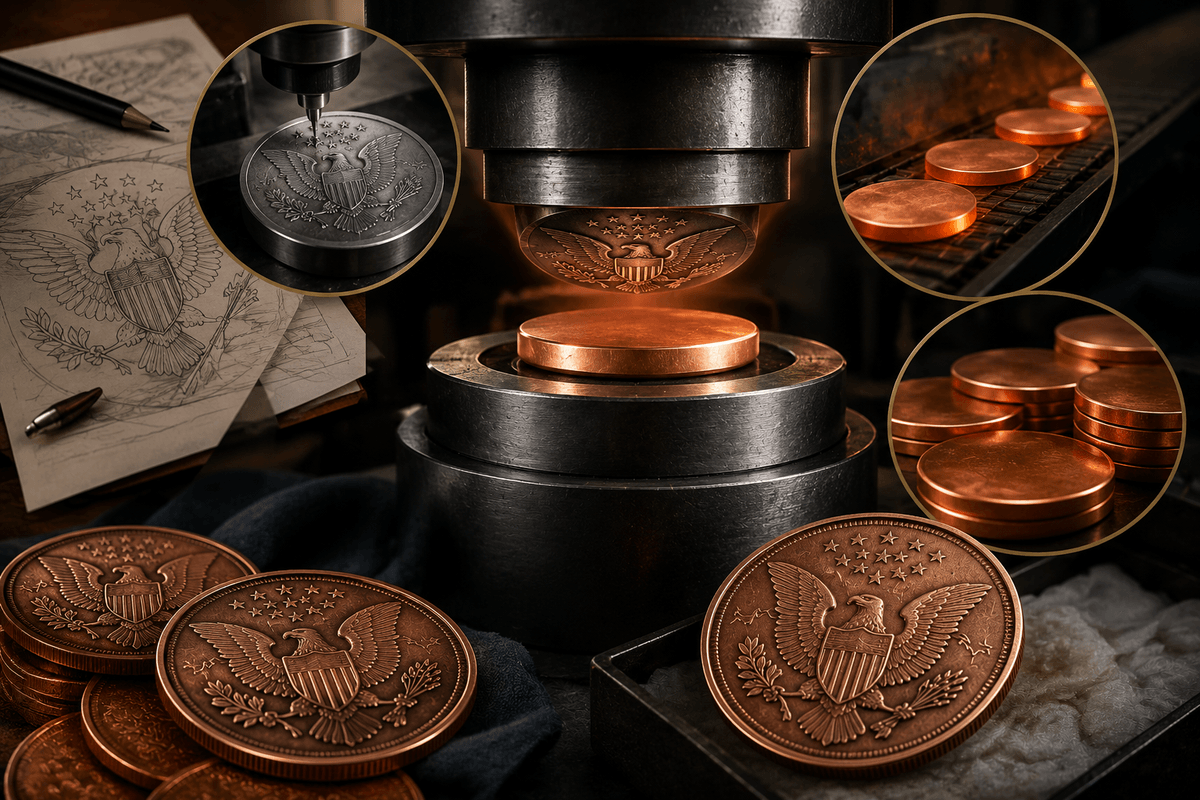
- Coin artwork and design creation
- Steel die engraving and tool creation
- Manufacturing copper planchets (coin blanks)
- Die striking the coin under high pressure
- Finishing, quality control, and packaging
Premium collectible coins are produced using die striking — which creates sharper detail, deeper relief, and a more professional appearance than cast coins.
What Is a Copper Coin Planchet?
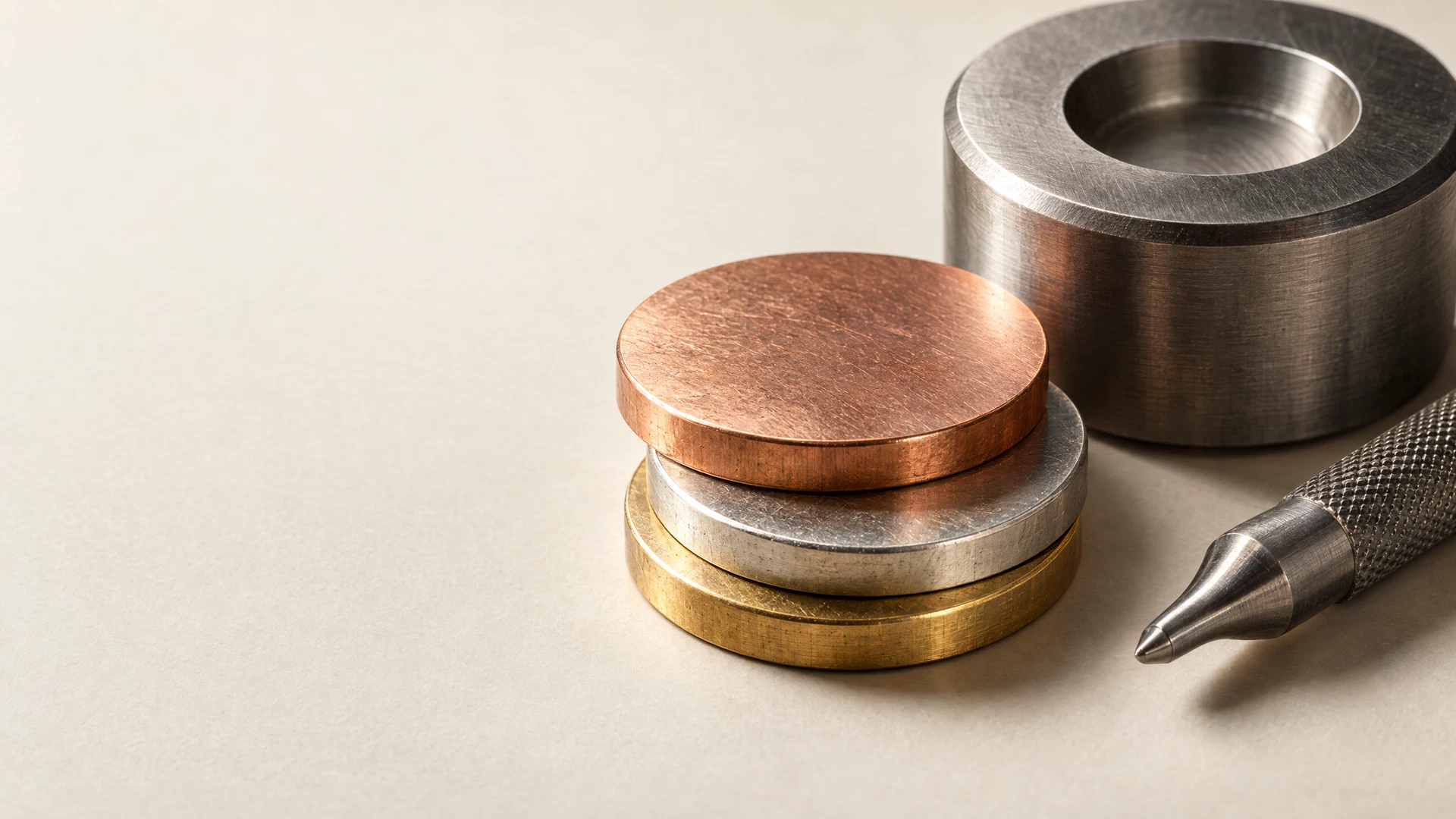
Before a coin can be struck, it begins life as a flat metal blank called a planchet . A planchet is a precisely cut metal disc manufactured to exact specifications for diameter, weight, thickness, and metal purity.
Custom collectible rounds typically use:
- .999 fine copper (99.9% pure)
- Pure copper alloys
- Antique copper stock
- High-relief copper blanks for deep-relief designs
Planchet Tolerance
Each planchet is manufactured to strict tolerances for diameter, weight, thickness, and metal purity. A 5 oz .999 fine copper round requires significantly different dimensions than a standard 1 oz copper round. Planchet quality plays a major role in the final appearance of the finished coin.
The Five Stages of Custom Copper Coin Production
Coin Artwork and Design Development
Every custom copper coin begins with artwork. Designers create detailed concepts for the obverse (front) and reverse (back), including text placement, relief depth, borders, mint marks, and serial numbering locations. Design software includes ZBrush, Adobe Illustrator, Rhino, and CAD modeling tools. Experienced mint artists adjust designs to ensure proper metal flow, strong detail retention, clean strike quality, and long die life.
Die Engraving and Tool Creation
Once artwork is approved, steel minting dies are created. A die is a reverse image of the finished coin — when pressure is applied, the design transfers from die to copper planchet. Modern mints use CNC engraving and precision machining. After cutting, dies undergo heat treatment to strengthen them for thousands of strikes, then polishing to establish the final surface quality — proof-like mirror, matte, or antique.
Manufacturing Copper Planchets
Copper stock is rolled into sheets of consistent thickness. Industrial presses punch circular blanks to exact diameter and weight specifications. Each blank is deburred to remove sharp edges, cleaned to eliminate surface contaminants, and annealed — a heat treatment that softens the copper for better metal flow during striking. Every planchet is inspected before entering the press.
Die Striking the Copper Coin
The prepared planchet is placed between the obverse and reverse dies in a minting press. The press applies enormous pressure — dozens to hundreds of tons depending on design and coin size — forcing copper into every detail of the die to create raised relief, fine textures, sharp lettering, and deep dimensionality. Premium collector pieces are struck multiple times for greater depth and enhanced detail.
Finishing, Quality Control, and Delivery
After striking, coins receive finishing treatments. Each coin is then inspected for weight, surface quality, strike consistency, and finish uniformity. Defective pieces are removed. For limited-edition collectibles, serial numbers and certificates of authenticity are verified. Coins are packaged in capsules, display cards, or serialized numbered sets and shipped securely.
Looking for custom die-struck copper coins?
Hart Strike Mint produces custom copper rounds, commemorative coin series, and limited-edition collectibles at .999 fine purity. Every project is die-struck to collector grade.
Step 5 in Detail: Copper Coin Finishing Options
After striking, coins often receive additional finishing treatments that create the final appearance collectors see. Finishing transforms a struck coin into a premium collectible.
Antique Copper Finish
Darkens recessed areas and highlights raised details, creating dramatic visual contrast.
Proof-Like Mirror
Produces highly reflective surfaces through precision die polishing and controlled striking.
Matte Finish
Provides a softer, non-reflective surface with an understated, classical appearance.
UV Color Application
Adds vibrant color to the coin's surface while preserving all struck relief detail.
Gilding
Applies gold or precious metal accents to selected design areas for premium visual impact.
Edge Numbering
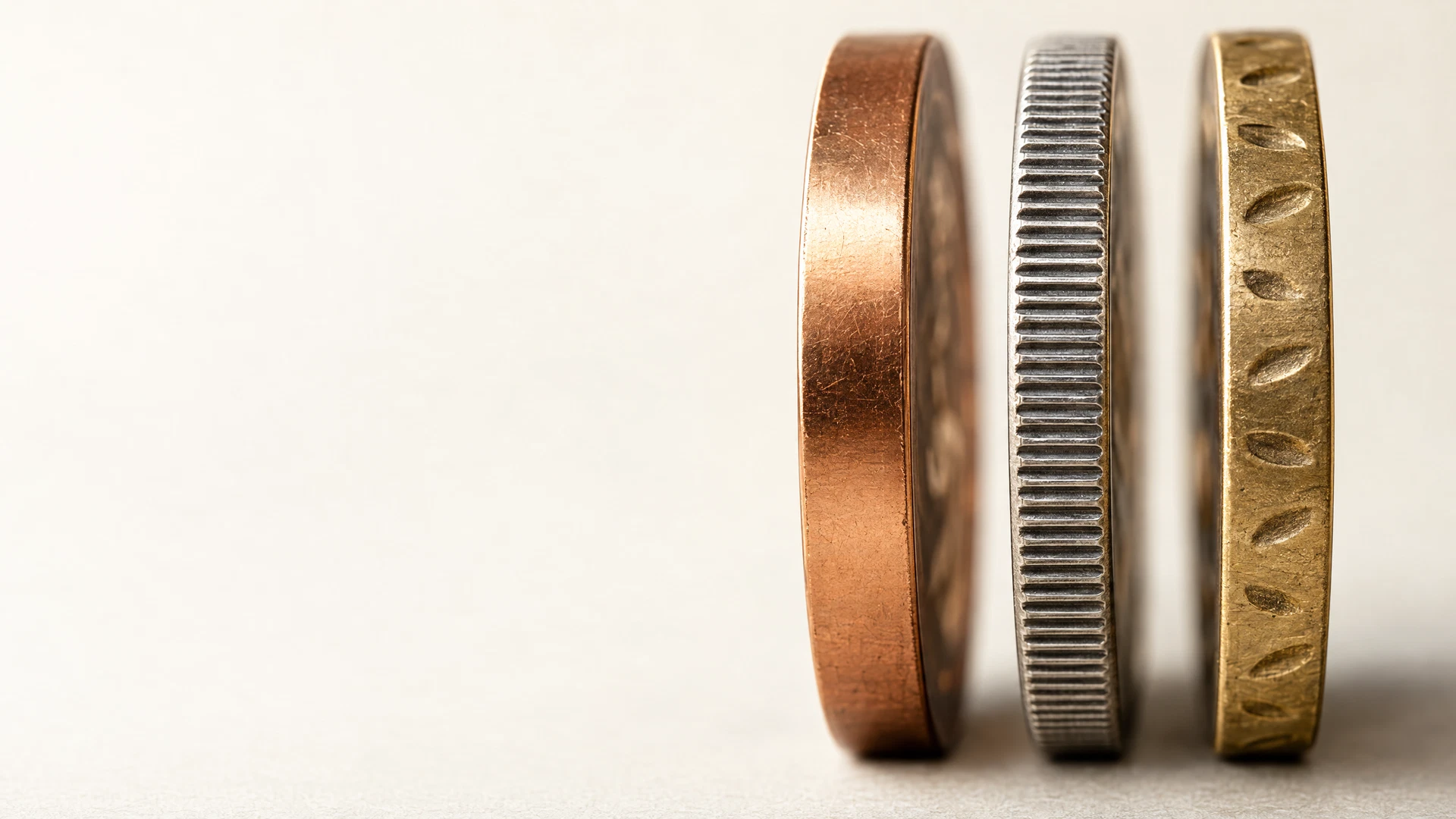
Adds serial numbers and limited-edition identifiers to the edge of the coin.
Die-Struck vs Cast Copper Coins: Full Comparison
One of the most common collector questions is what separates die-struck from cast copper coins — and which type is worth buying or commissioning.
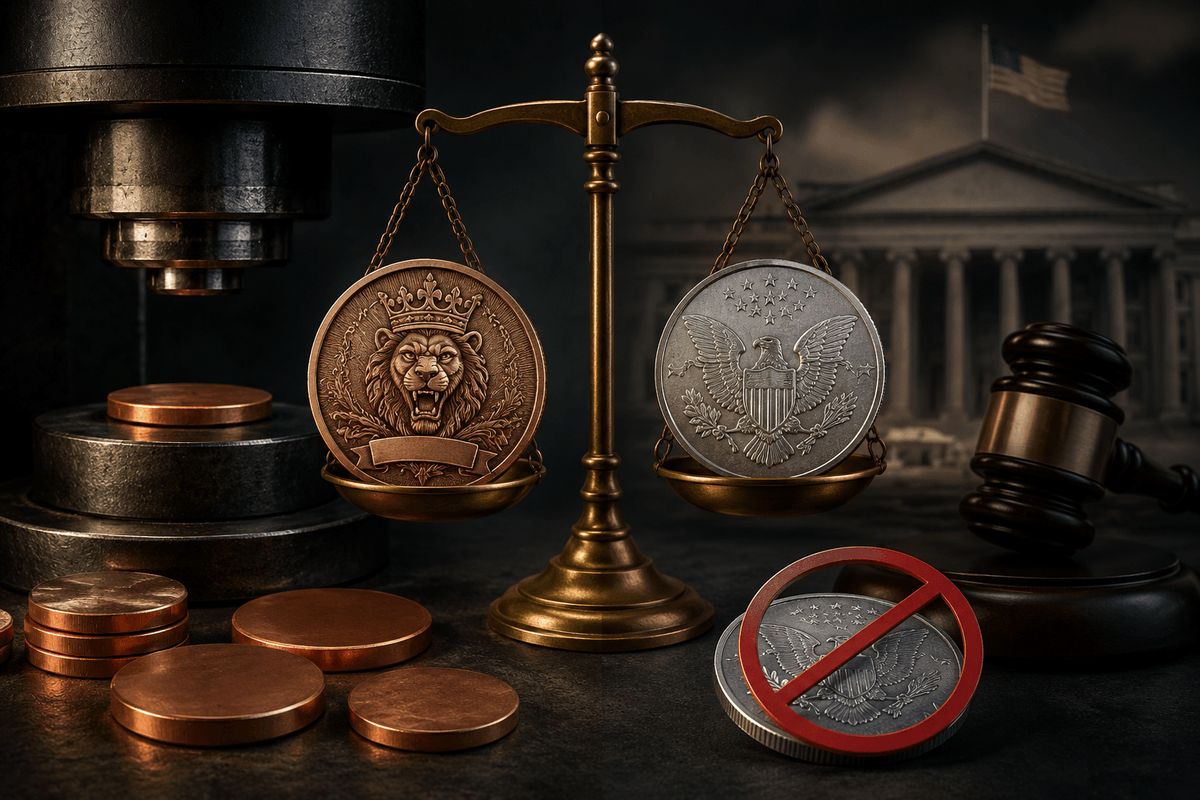
For premium collectible copper rounds and commemorative coins, die striking remains the clear industry standard.
Why .999 Fine Copper Is the Collector Standard
Many collectible rounds are produced using .999 fine copper — meaning the metal is 99.9% pure copper. Collectors prefer .999 fine copper because it offers high purity, rich copper color, excellent detail retention, historical appeal, and affordable collectibility.
Although copper is different from gold and silver bullion, collectible copper rounds have developed a large and passionate stacker and collector community — drawn by the low barrier to entry, the tactile quality of struck fine copper, and the genuine scarcity of limited-edition series from respected private mints.
How Long Does Custom Copper Coin Production Take?
Production timelines vary by design complexity, die creation requirements, mintage quantity, and finishing options. Die creation is typically the most time-intensive stage of any new custom copper coin project.
Why Collectors Prefer Die-Struck Copper Coins
The craftsmanship of die-struck copper coins is why they command a premium above raw copper melt value and why limited editions from respected private mints regularly sell out within hours of release.
- Better detail. Fine textures and intricate artwork reproduce with precision that casting cannot match.
- Greater depth. High-relief designs create dramatic three-dimensional visual impact.
- Consistency. Each strike closely matches the previous coin across the full mintage.
- Durability. Properly struck coins maintain fine detail for decades of handling and display.
- Premium appearance. Professional minting creates stronger perceived and realized collector value.
Final Thoughts
The process of making custom copper coins begins with artwork and engineering, moves through precision die creation and planchet manufacturing, and culminates in high-pressure die striking and finishing. The result is a durable, detailed collectible that combines art, craftsmanship, and precision manufacturing.
Whether you're producing custom challenge coins, commemorative pieces, corporate awards, or limited-edition collectible rounds — understanding the die-striking process explains why premium copper coins remain one of the most popular forms of custom minted products today.
At Hart Strike Mint , every project follows the same commitment to quality craftsmanship, precision die creation, and professional striking standards collectors expect from a modern private mint.
Start your custom copper coin project.
Custom copper rounds, commemorative series, challenge coins, and limited-edition collectibles — die-struck at .999 fine purity. Over 40 completed projects. Every launch sells out in hours.
Frequently Asked Questions
Continue exploring
More in Private Minting Process & Coin Basics.
Browse the private minting process & coin basics topic hub for related journal entries and a project-oriented starting point.
A project conversation
Discuss a related custom project
If this topic connects to a collector-led coin, round, bar, or medallion idea, share the purpose, preferred format, and any artwork or reference material for a project review.
Start a project review