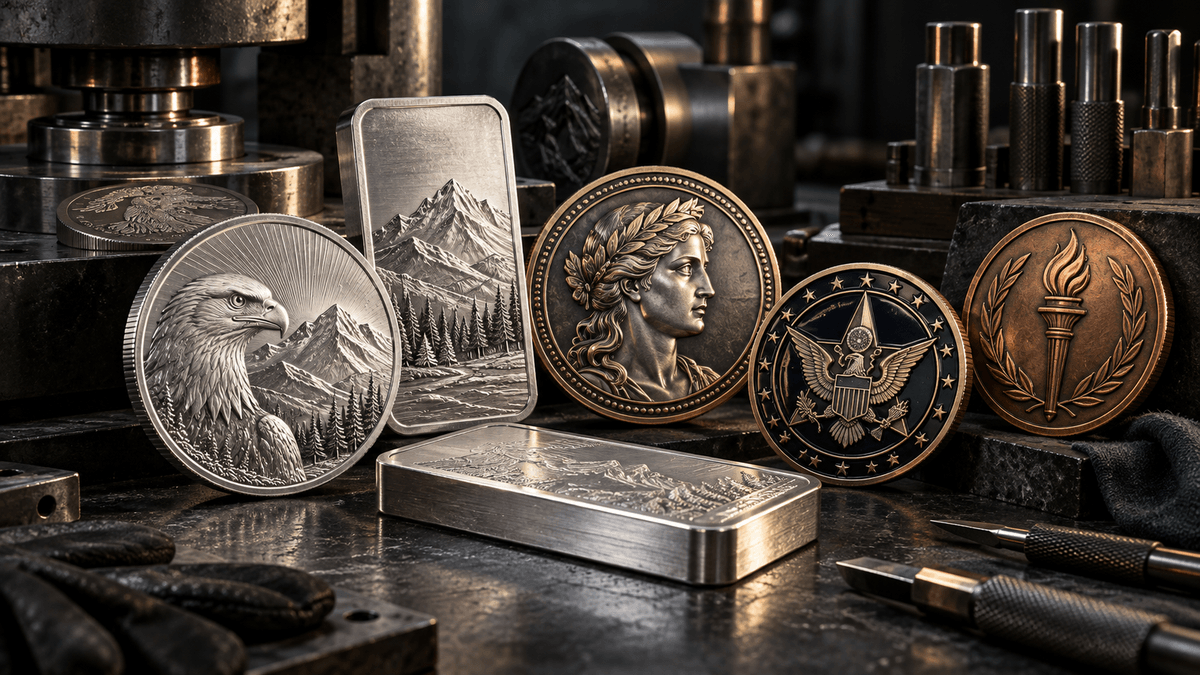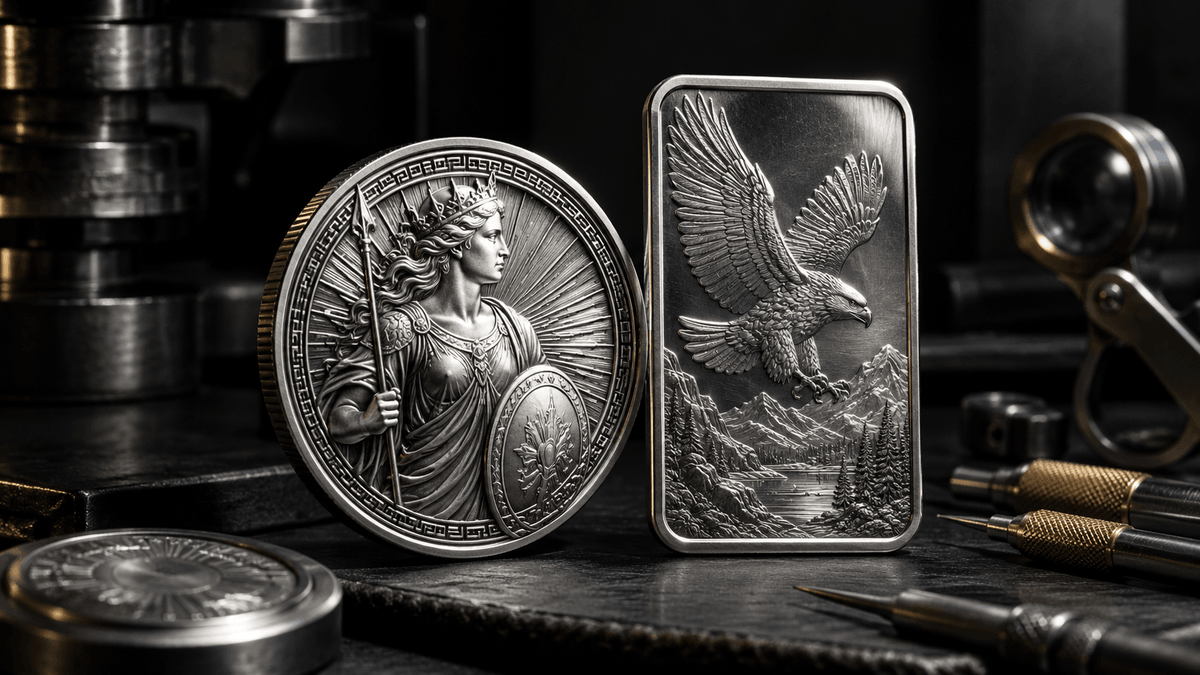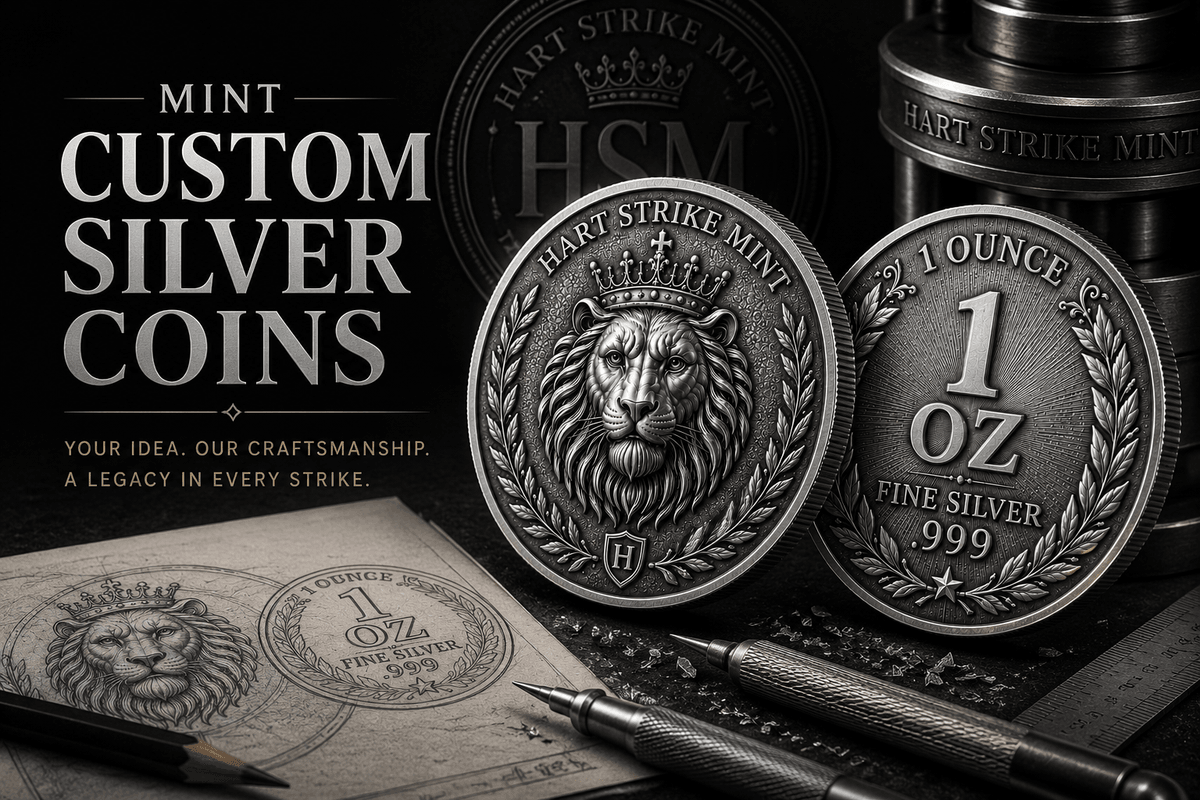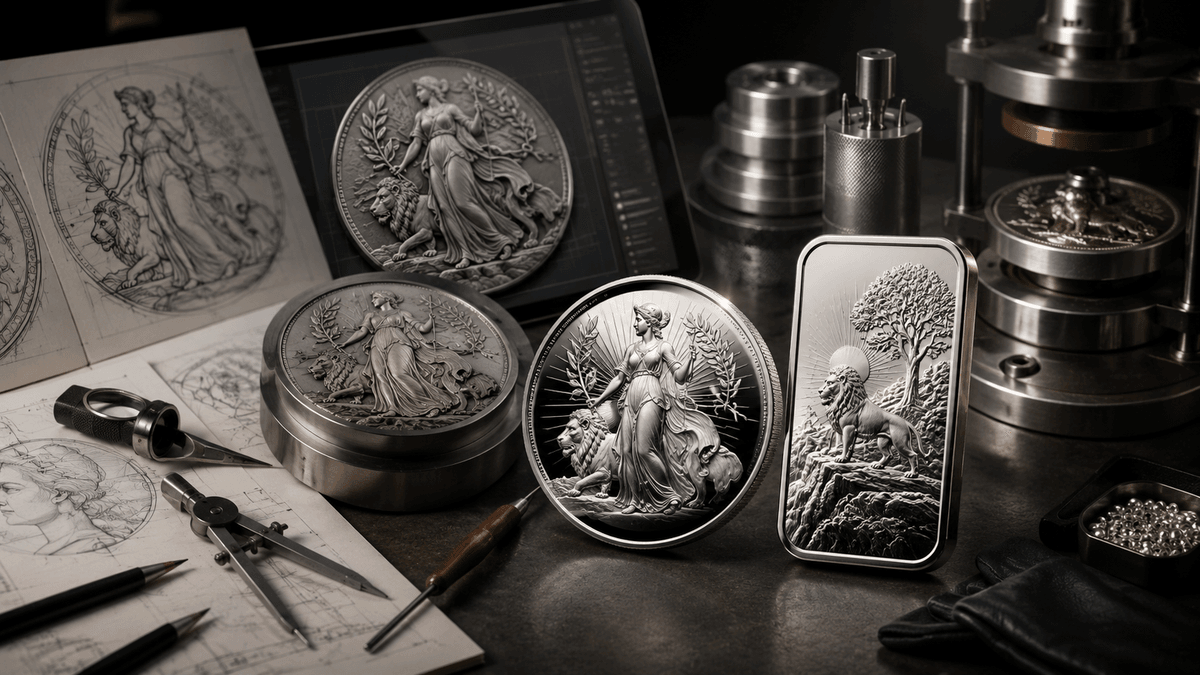
A good custom silver coin project starts with a clear purpose. It may be a private-label silver round for a dealer, a commemorative piece for an event, a numbered collector release, or a branded coin created around an existing intellectual property. The metal, artwork, format, and presentation should all support that purpose.
Hart Strike Mint lists custom silver rounds and bars among its custom-minting work. The site also describes projects for brand collaborations, private dealer partnerships, themed collector series, corporate awards, event commemoratives, and military reunions. That range matters because a custom silver coin is not one fixed product. It is a project that needs a defined audience, a documented design, and specifications buyers can understand.
Key Takeaways
- The best custom silver coins begin with a specific use, audience, and design brief.
- A custom silver project can be a round, bar, medallion, commemorative, private-label release, or collector edition.
- Buyers should see the factual specifications for every release, including weight, purity, dimensions, mintage when applicable, and packaging.
- A fractional silver project needs especially clear labeling so collectors know the exact physical silver weight.
What Makes a Custom Silver Coin Project Different?
A custom silver coin project is a made-to-purpose release rather than a generic item with a logo added at the end. The project can carry a brand story, honor an anniversary, recognize an organization, support a dealer program, or give collectors a connected series to follow. The design and product details should make that purpose obvious.
For example, a commemorative silver coin may need a date, an event name, an organization mark, and a reverse that fits the occasion. A private-label silver round may instead need a consistent brand identity across several releases. A collector series may need recurring visual elements that make each issue recognizable while leaving room for a new theme on the next release.
This is where a custom silver coin maker adds practical value. The artwork needs to translate into metal, and the finished piece needs to be described with the same care as the design. The most useful product page tells buyers what the item is, what it contains, how it is presented, and whether it is a continuing or limited-edition release.
Collector Trust Rule: The more specific a custom release is about its physical details, the easier it is for buyers to understand what they are receiving. A title alone is not enough. A good listing states the weight, purity, format, dimensions when known, packaging, edition information, and current availability.
Start With the Job the Piece Needs to Do
Before choosing a size or sketching artwork, decide what the piece is for. This keeps the project focused and helps avoid a design that looks good in a mockup but does not fit the buyer, budget, or release plan.
Hart Strike Mint’s existing custom-project language includes themed collector series, corporate coin awards, event commemoratives, and numbered runs. That gives a useful foundation for project planning. A customer should still confirm the exact scope, material, lead time, artwork requirements, and available options before treating any concept as a final specification.
Internal Link Suggestion: Read Hart Strike Mint’s guide to creating custom coins for examples of how brands, collectors, and founders turn an idea into a finished project.
Build the Design Around the Physical Format
A custom silver coin design should be planned as a physical object. Fine lines, text scale, relief, border treatment, and the balance between the obverse and reverse all affect how a design reads once it is struck. Artwork also needs a hierarchy. The most important visual message should be clear at a glance, while smaller details reward a closer look.
Start with the essential information. That might include the project name, the year, a brand or organization mark, a weight statement, and a fineness statement when the project uses silver with a stated purity. Then choose the imagery that gives the release its character. A design can be detailed without being crowded when the main theme has room to breathe.
The same applies to a custom silver bar. A bar often gives more room for portrait-oriented artwork, a numbered space, a certificate-style layout, or a story told in panels. A round can feel more like a traditional coin or medal and can work well for a series with matching obverse elements. Neither format is automatically better. The right choice depends on the message, the intended display, and the release plan.
Plan for More Than One Image
Product photography is part of the release record. A customer comparing custom silver rounds wants to see both sides, the edge if it carries information, and any display card, capsule, or other packaging included with the piece. For a detailed design, close views help confirm what is present instead of forcing buyers to infer details from a distant photograph.
Image Placement Note: Insert approved product photographs of the obverse, reverse, edge, and packaging. Use descriptive alt text such as “custom silver round obverse for a Hart Strike Mint commemorative project.”
Specify the Release Before It Is Offered for Sale
A polished product description is helpful, but it should not replace the specification table. Whether the item is a custom silver coin, a private-label silver round, or a limited-edition commemorative, buyers need a factual record that stays consistent across the product page, social posts, dealer materials, and packaging.
This approach is especially useful for custom silver coins sold through a dealer or a partner. The partner needs the same accurate product information that appears on the mint’s own listing. Consistent specifications reduce buyer questions and help a series build a dependable release record over time.
Where Fractional Silver Fits Into a Custom Project
Fractional silver refers to a physical silver product in a smaller denomination than the standard whole-ounce format. In product content, it is important to distinguish this meaning from fractional shares, which are financial securities and are not a physical silver item.
For Hart Strike Mint, a fractional silver concept should be treated as a specification-first project. Before it is promoted as a fractional silver bar, fractional silver round, or fractional silver coin, the final listing needs to identify the exact physical weight, stated purity, size, and presentation. Small-format pieces can be visually compelling, but the design should never leave the metal content unclear.
The search interest around the subject reflects common buyer questions: “what is fractional silver,” “what are fractional silver bars,” “what is a fractional silver coin,” and “why is fractional silver more expensive.” Those are useful questions to answer on a product or FAQ page, as long as the answers stay tied to the actual release. Avoid generic price predictions or claims that a small-denomination item will perform a certain way in the future.
Fractional Silver Page Tip: A fractional-silver page should lead with the exact weight and purity, then explain the format and packaging. Do not make availability, mintage, or premium claims that cannot be verified for the individual release.
Give Buyers a Clear Path From Idea to Inquiry
A potential custom project client does not need a complete production file before making contact. They do need enough information to describe the goal. A useful initial inquiry explains the planned audience, preferred format, any existing artwork or brand elements, the intended quantity range, and whether the project is a single release or part of a series.
The inquiry can also identify what needs to be decided. For example, a museum may have a historic image but need help adapting it into a round format. A dealer may know that it wants custom silver coins in a recurring program but need to decide how each issue will differ. A founder may have a brand mark and a story but need a clear first-release concept.
Hart Strike Mint’s contact page is the appropriate place to begin a custom project conversation. Being specific about the intended use gives the mint a better starting point and helps keep later decisions consistent with the original idea.
Start a Custom Silver Project
Use the Hart Strike Mint contact page to discuss a custom silver project, a private-label release, a commemorative coin, or a collector series.
Questions Buyers Ask About Custom Silver Coins
Can a Custom Silver Coin Be Part of a Collector Series?
Yes. A custom silver coin can be designed as one issue in a themed or numbered series. The release should clearly state how the current piece relates to the series and should avoid promising a future schedule until it is confirmed.
What Is the Difference Between a Custom Silver Coin and a Custom Silver Round?
In collector and bullion-style product language, “round” commonly describes a coin-shaped piece that is not issued as legal tender. A listing should use the format name that accurately describes the product and should not imply government coinage where none exists.
What Should a Custom Silver Coin Listing Include?
The listing should identify the format, silver content and purity when applicable, weight, dimensions when known, edition information, packaging, availability, and clear photographs. The exact fields depend on the project, but the goal is the same: a buyer should understand the physical item without guessing.
Can a Custom Project Use Fractional Silver?
It can, if the piece is specified clearly. A fractional silver project needs the exact physical silver weight, stated purity, dimensions, and packaging information before it is offered for sale or described as a small-denomination silver product.
Does Hart Strike Mint Offer Custom Silver Projects?
Hart Strike Mint identifies custom silver rounds and bars as part of its custom-minting work and describes several project contexts, including collaborations, dealer partnerships, commemoratives, and collector series. Contact Hart Strike Mint with the details of your proposed project to discuss current possibilities.
The Goal Is a Release Collectors Can Understand
The strongest custom silver projects are clear on two levels. The artwork gives the piece a reason to exist, and the specification record tells the buyer exactly what it is. That balance works for a one-time commemorative, a private-label silver round, or a growing collector series.
Hart Strike Mint’s custom-minting work spans the kind of projects that need that balance: branded collaborations, partner releases, themed series, awards, and commemoratives. A well-prepared custom silver coin brief gives that work a solid starting point. Define the purpose, plan the design for the physical format, document the final specifications, and give collectors an accurate product page when the release is ready.
Continue exploring
More in Custom Silver Rounds & Bars.
Browse the custom silver rounds & bars topic hub for related journal entries and a project-oriented starting point.
A project conversation
Discuss a related custom project
If this topic connects to a collector-led coin, round, bar, or medallion idea, share the purpose, preferred format, and any artwork or reference material for a project review.
Start a project review