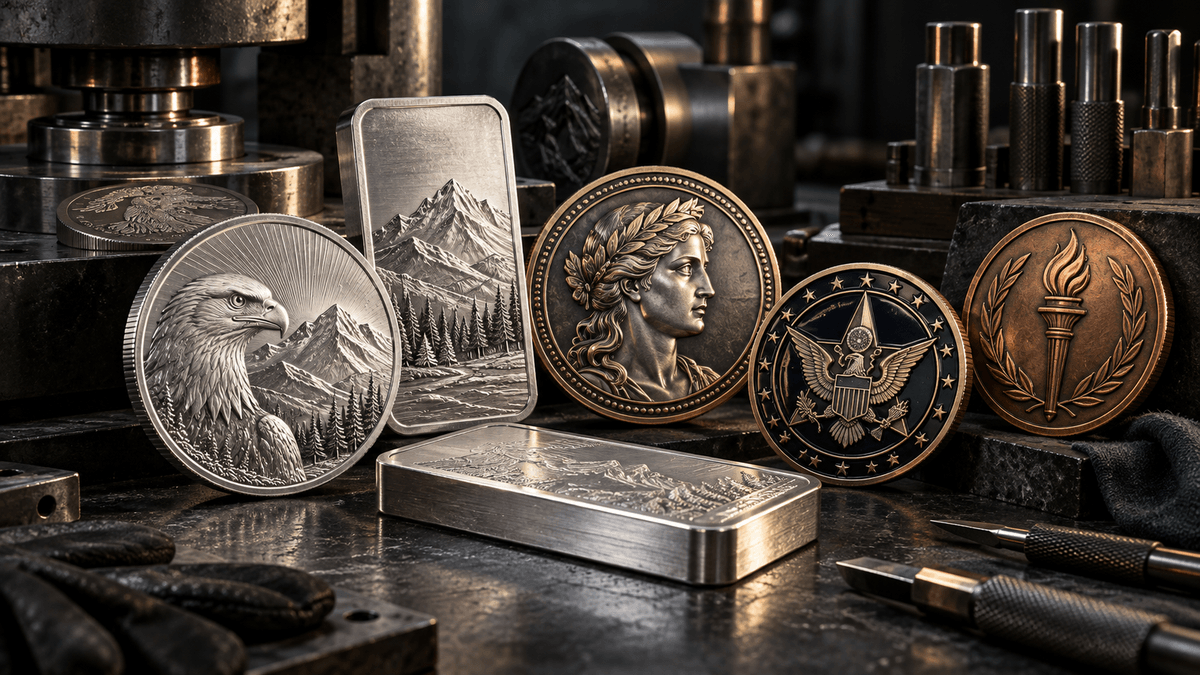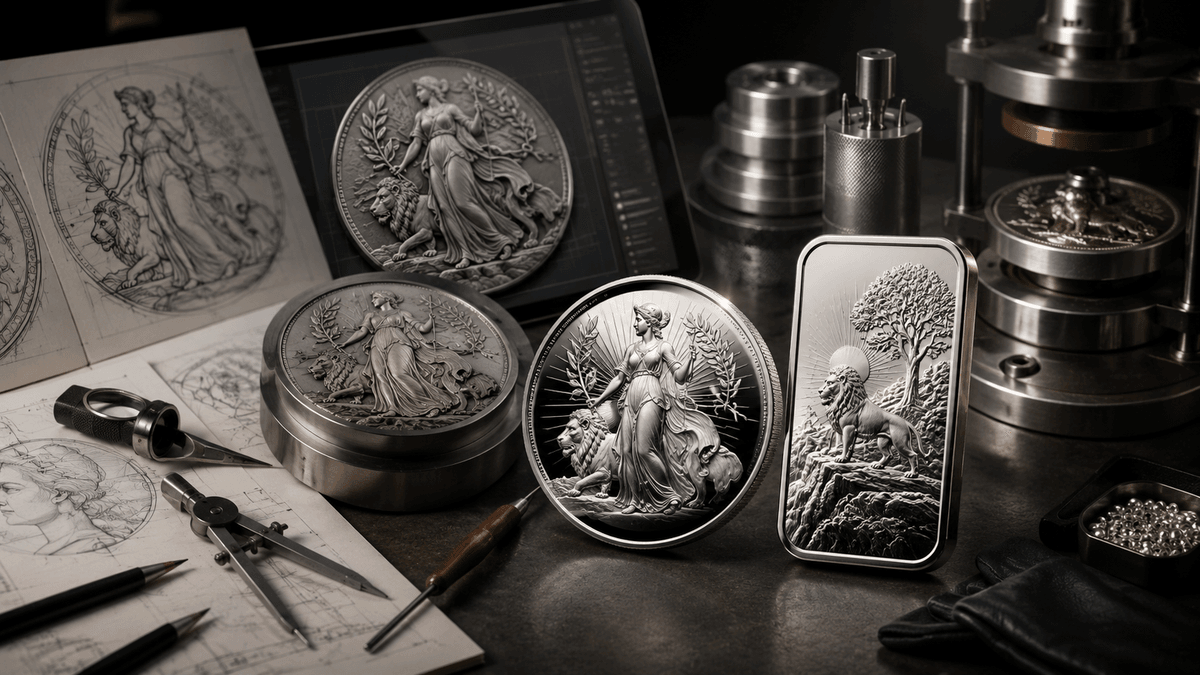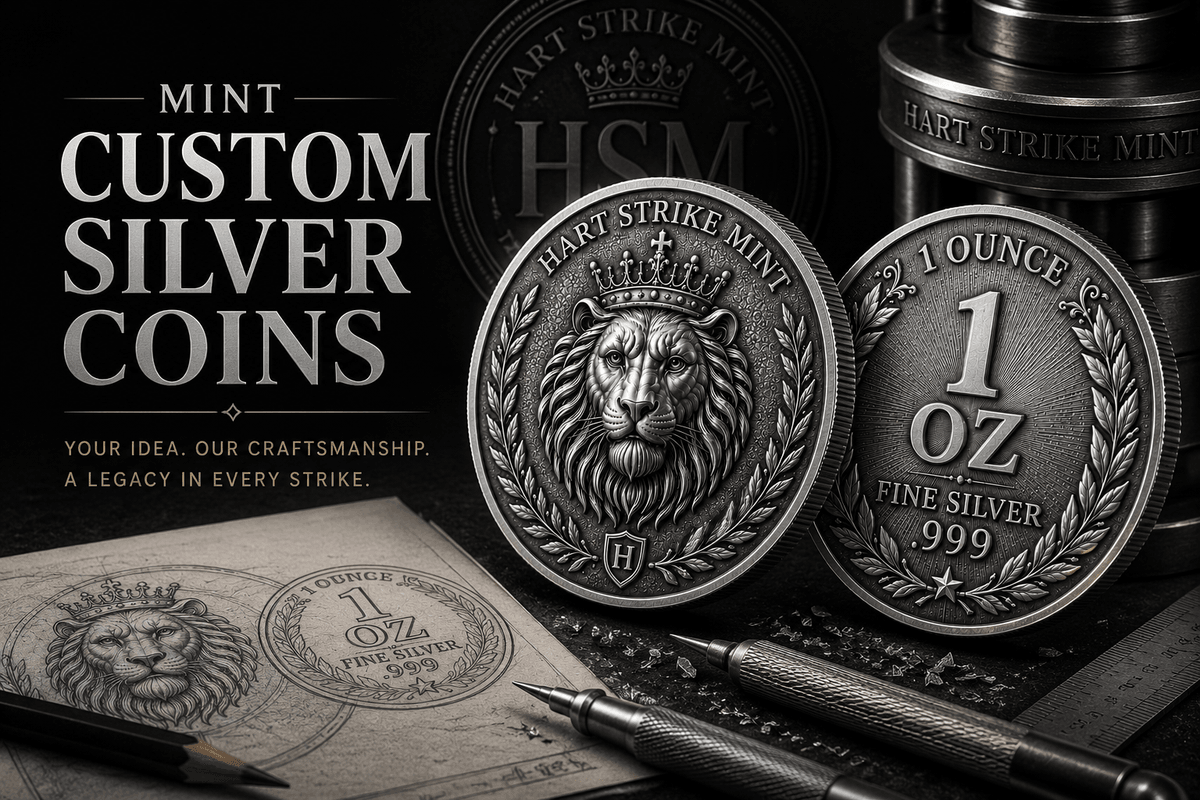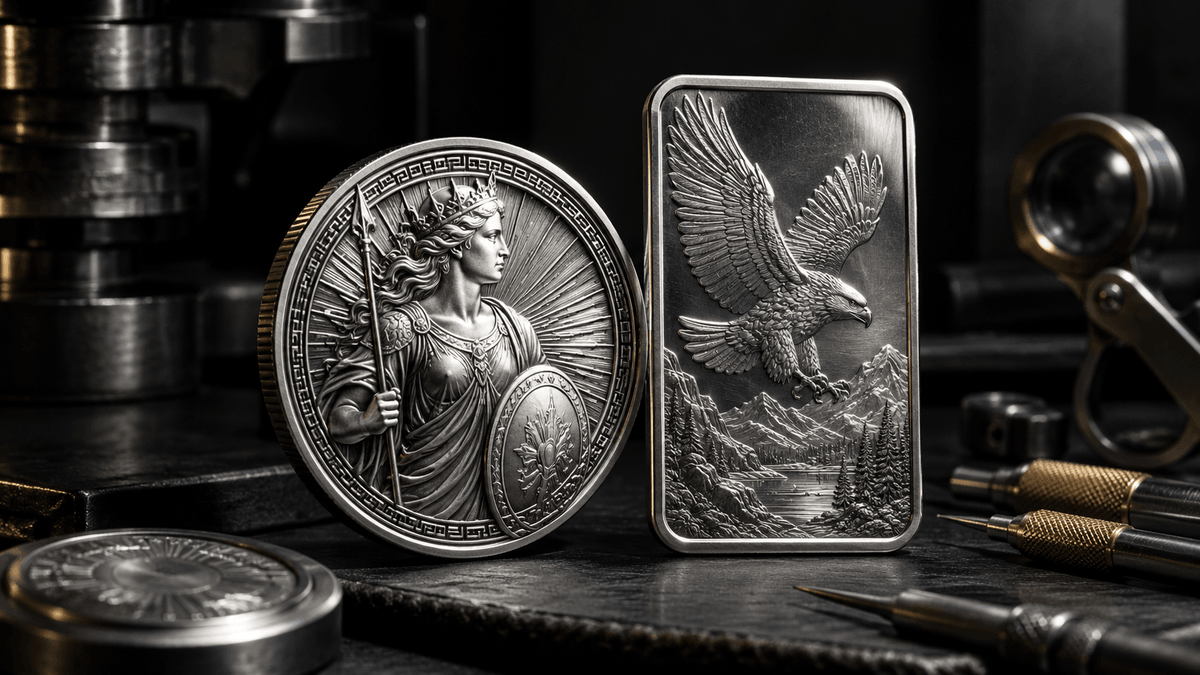
The best format for a custom silver project depends on what the piece needs to communicate. A branded dealer release may work well as a custom silver round. A formal commemorative may call for language and design choices that make it feel more like a coin. A recognition piece may be better described as a medallion. The physical format, legal status, artwork, and product description need to agree with one another.
In everyday collector language, people often use “coin” for any round piece of metal. For a product listing, it is better to be precise. A government-issued legal-tender coin is different from a privately issued silver round, even when both are circular and both carry a stated silver content. A custom project becomes easier to explain once the correct terms are selected at the beginning.
Hart Strike Mint lists custom silver rounds and bars as part of its custom-minting work. Its project descriptions include brand collaborations, private dealer partnerships, themed collector series, corporate coin awards, event commemoratives, military reunion coins, and numbered runs. Those uses do not all need the same format.
Key Takeaways
- A custom silver coin and a custom silver round can look similar, but their legal status and product language may differ.
- A private-label silver round works well when the goal is a branded collector or dealer release without a legal-tender claim.
- A custom silver project should define its format, exact stated weight, purity when applicable, dimensions, edition details, and packaging before the listing is published.
- The best format is the one that fits the project story and can be described accurately to the buyer.
The Short Answer: Use the Name That Accurately Describes the Item
A custom silver round is usually a privately issued, coin-shaped silver piece. It may be made for a dealer, brand, collector group, anniversary, or themed series. It can carry a stated weight and purity, but it is not automatically legal tender.
A custom silver coin may refer to a round item in casual speech, but the formal product page should be more careful. If the item is legal tender and issued by a government or authorized issuer, that status should be stated. If it is not, the description should avoid suggesting that it is. The listing can still use “coin-shaped collectible” or “silver round” when that is the accurate term.
A custom silver medallion may be the clearest choice for an award, reunion, museum, or commemorative piece that is not meant to be presented as a bullion-style product. The name does not make the project less substantial. It simply helps the buyer understand its purpose.
Start With the Project, Not the Word “Coin”
A custom silver coin design is stronger when it begins with a clear purpose. Ask what the recipient, customer, or collector should recognize immediately. That first answer helps determine the format, the design hierarchy, and the way the finished item will be presented.
A private dealer partnership may need a design that can continue across several releases. A military reunion piece may need unit or event references that matter to the people receiving it. A corporate award may need a simpler, more formal layout that looks right in a presentation box. A themed collector series may need a consistent obverse and a different reverse for each issue.
The format follows that decision. A round can create a traditional coin-like presentation and can support an ongoing series. A bar can give the designer a vertical or horizontal panel for an image, title, date, and serial space. A medallion can put the commemorative message first, with a layout that is less constrained by bullion conventions.
Hart Strike Mint Planning Rule: Choose the format after you can describe the project in one sentence. “A custom silver round for an annual dealer series” is a clearer starting point than “we want to make a coin.”
Compare the Design Space Before Approving Artwork
Artwork needs to fit the final physical object. A design that looks readable on a large screen may not stay readable on a smaller round or bar. Text, borders, relief, and fine details should be considered early instead of added after the central design is complete.
A round naturally guides the eye toward the center. It can work well for a portrait, crest, compass, seal, mascot, or central emblem. The rim can carry the project name, date, stated weight, or other required information. A bar provides more directional space. It can suit a panoramic scene, a certificate layout, a historic image with a caption, or a serial number placed outside the primary artwork.
The same product details should follow the design into the listing. A buyer looking at a custom silver round should be able to see the actual obverse and reverse, read the stated weight and purity, understand the edition status, and know whether the packaging shown is included.
Build the Specification Record Before Marketing the Release
A title and a design render are not enough to publish a custom silver project. The product record should describe the item that will actually be delivered. If a detail is still being decided, label it as preliminary or wait until it is final.
These details help a custom silver coin maker and the project client work from the same plan. They also reduce confusion when the release is discussed by dealers, collectors, or partner organizations. A product description should not invent a mintage, serial format, or delivery date simply because similar releases use them.
Important: Design language and product facts should match. Do not call a private round a legal-tender coin, do not state a purity that has not been verified, and do not list a future release date until it is confirmed.
Private-Label Silver Rounds and Branded Collector Projects
A private-label silver round can give a dealer, retailer, brand, or organization a recognizable product without copying the look of a government coin. The project identity may come from the artwork, the series title, the packaging, the story behind the issue, or the partnership that supports it.
Hart Strike Mint’s existing project descriptions mention IP brand collaborations and private dealer partnerships. A private-label release should be clear about who is responsible for the brand, who is making the piece, and what information is final. When a design incorporates licensed characters, logos, or artwork, the project needs the appropriate permission before the release is promoted.
For a recurring series, consistency is more useful than artificial scarcity language. Collectors benefit from a visible pattern: common design elements, a clear issue order, a reliable product page structure, and updated availability. If a future release is still in development, say that the series is planned and avoid publishing final specifications until they exist.
When Fractional Silver Changes the Format Conversation
A fractional silver project uses a smaller physical silver denomination than a full troy ounce. The format choice becomes more important because small pieces can be photographed in ways that make their scale hard to judge. A fractional silver bar, round, or coin-shaped collectible should display its exact stated weight and purity prominently.
The word “fractional” does not tell the buyer enough by itself. Use exact measurements. If a project uses a fractional ounce or a gram denomination, state the exact amount in the product record rather than asking buyers to calculate it from a label or an image.
Small-format products can work for a carded collectible, a series insert, a gift-focused item, or a compact branded release. The design may be impressive, but the information needs to do more work. Clear scale, physical specification, and packaging details become part of the buyer’s understanding of the piece.
Plan a Custom Silver Project With Hart Strike Mint
Hart Strike Mint helps dealers, brands, collectors, organizations, and founders think through custom silver rounds, bars, medallions, private-label releases, commemoratives, and collector series.
Questions About Custom Silver Coins and Rounds
Is a Custom Silver Round the Same as a Legal-Tender Silver Coin?
Not necessarily. A custom silver round is typically a privately issued, coin-shaped item. Legal-tender status should only be claimed when it applies to the finished product and its issuer.
What Information Should a Private-Label Silver Round Include?
The listing should include the format, exact stated weight, purity when applicable, dimensions when verified, product images, edition information, packaging, and current availability. It should also identify the release accurately as a private issue when it is not legal tender.
Is a Round or Bar Better for a Custom Silver Project?
Neither is always better. A round often fits a coin-like series or central emblem. A bar can give the design more linear space for a scene, title, date, or serial field. The best format depends on the project purpose and the final design.
Can a Custom Silver Project Use a Numbered Run?
It can, but the numbering approach and total edition information should be final before they are shown in marketing materials. If the information is not final, the page should say so or wait until it is confirmed.
Does Hart Strike Mint Create Custom Silver Projects?
Hart Strike Mint identifies custom silver rounds and bars as part of its work. The site also describes projects for collaborations, dealer partnerships, themed collector series, awards, commemoratives, and numbered runs.
Give Each Project the Right Name and a Complete Record
A custom silver project does not need inflated language to be memorable. The design has a clear job, the format matches that job, and the product page tells the truth about what the buyer will receive. That can be a private-label silver round, a custom silver bar, a commemorative medallion, or a series piece with its own place in a collection.
Choose the term that accurately describes the item. Plan the artwork for the actual physical format. Then publish the final specifications in a consistent record. That is the best foundation for a release that collectors and project partners can understand.
To discuss a custom silver round, bar, medallion, or collector series, contact Hart Strike Mint with the project purpose, artwork direction, and intended quantity range.
Continue exploring
More in Custom Silver Rounds & Bars.
Browse the custom silver rounds & bars topic hub for related journal entries and a project-oriented starting point.
A project conversation
Discuss a related custom project
If this topic connects to a collector-led coin, round, bar, or medallion idea, share the purpose, preferred format, and any artwork or reference material for a project review.
Start a project review