Quick answer: Choose the coin size from the design, not the other way around. Measure against coins people know: a U.S. quarter is 0.955 inches (24.26 mm) across and a half dollar is 1.205 inches (30.61 mm). Then check that every word can be read at actual size. Crowded text causes more legibility problems than small coins.
Diameter is usually the first thing people ask about, and it shapes everything else: how much artwork fits, how big the lettering can be, how the piece feels in the hand and how it sits in a case. This guide gives you real reference sizes and a simple way to test whether your text will read.
Key takeaways
- Use real coins as a ruler. U.S. coin diameters are set by federal law.
- The space for text is smaller than the diameter suggests, because the rim and margins take some of it.
- Legibility depends on typeface, relief and finish as much as on point size.
- Print your artwork at 100% and read it at arm's length before you send it.
Reference sizes: real coins you can hold
The easiest way to pick a diameter is to hold a coin you already own. U.S. coin sizes are written into federal law (31 U.S.C. § 5112, as of October 2026):
| Coin | Diameter (inches) | Diameter (mm, converted) |
|---|---|---|
| Dime | 0.705 | 17.91 |
| Cent | 0.750 | 19.05 |
| 5-cent (nickel) | 0.835 | 21.21 |
| Quarter | 0.955 | 24.26 |
| Dollar coin | 1.043 | 26.49 |
| Half dollar | 1.205 | 30.61 |
| American Eagle silver bullion coin (1 oz) | 1.598 (converted) | 40.6 |
Data as of October 2026. Source: 31 U.S.C. § 5112(a) and (e). Millimeter and inch conversions use 1 in = 25.4 mm.
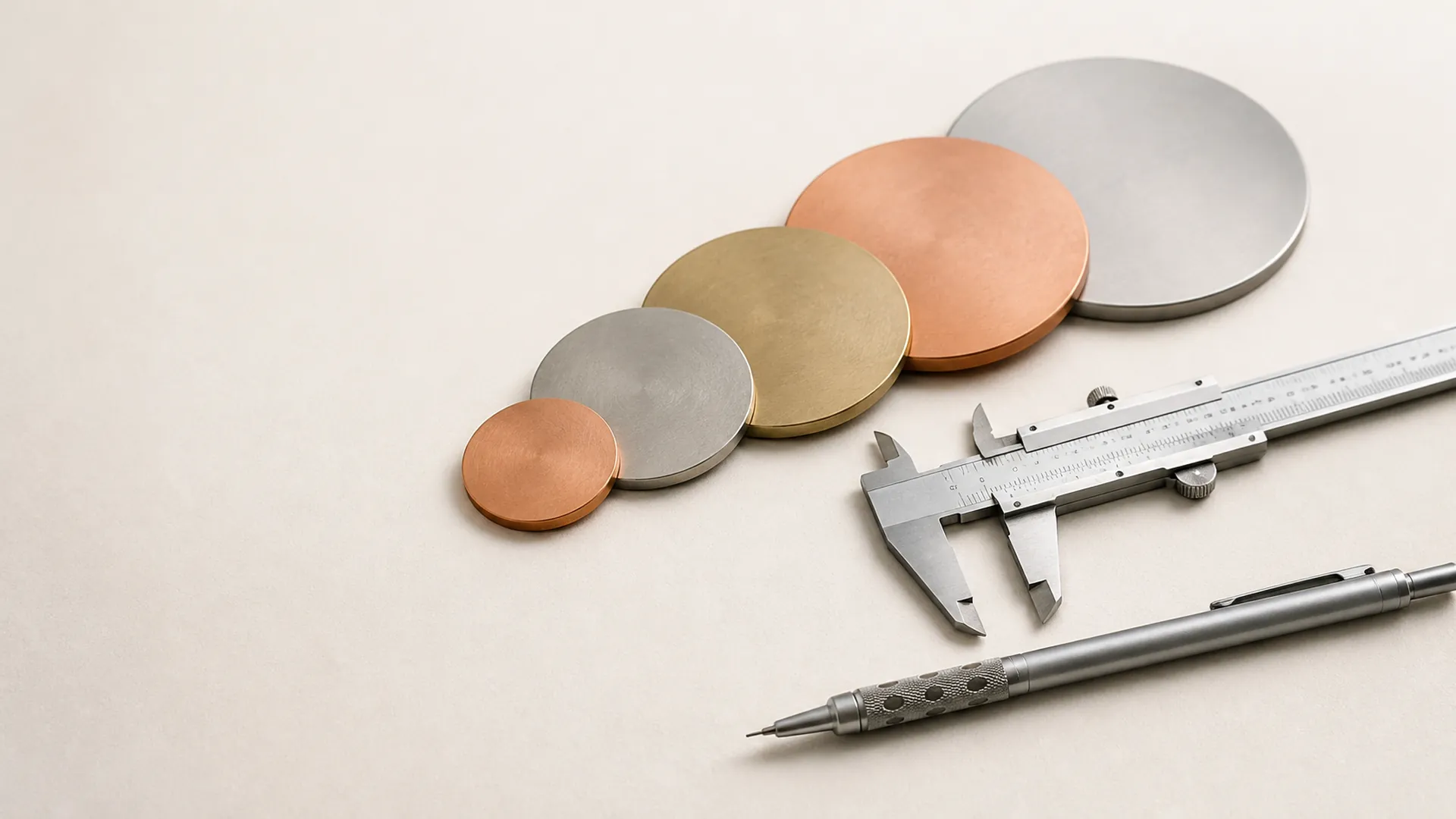
Lay your options out on a table. A design that feels crowded on a quarter may breathe on a half dollar. A piece the size of the silver bullion coin gives much more room for detail.
How to pick a diameter for your design
Start with what the piece has to carry.
- One strong symbol and a short name can work on a smaller piece.
- A portrait, a scene or a crest with a motto usually needs more room.
- Long text, such as a full organization name, dates and a slogan, pushes you to a larger diameter or to moving some text to the reverse or the edge.
Also think about use. A piece meant to be carried in a pocket or wallet needs a different size from one meant for a display case or a silver round series. Thickness matters too. A thicker piece feels more substantial and leaves room for an edge treatment.
How much room does text actually get?
Border text runs in a circle, so the circumference is the starting number: circumference = π × diameter. That gives these rough outer measurements:
- 1.0 in (25.4 mm) piece: about 3.14 in (79.8 mm) around.
- 1.5 in (38.1 mm) piece: about 4.71 in (119.7 mm) around.
- 2.0 in (50.8 mm) piece: about 6.28 in (159.6 mm) around.
These are the outer edge figures. Your lettering sits inside the rim, on a smaller circle, so the real text path is shorter. Leave space between the start and end of the line, and around any device that breaks the text, such as a star or a dot.
A practical check: type your border text in your design program, set it on a circle at the real size, and see whether it fits without squeezing the letter spacing.
How small can text go on a coin?
There is no single minimum that fits every project, and you should be wary of anyone who quotes one without seeing your artwork. These things decide whether small text reads:
- Typeface. Simple, even-weight letters hold up better than thin serifs or script.
- Stroke weight. Hairline strokes can fill in or disappear. Medium weights read more reliably.
- Raised or recessed. Raised letters catch light differently from letters sunk into the field.
- Relief and finish. Contrast between a frosted design and a polished field helps small text stand out. Our guides to coin relief and coin finishes explain why.
- Spacing. Tight letter spacing makes small words blur together.
For a sense of scale, federal rules on replica coins require the word "COPY" to be at least 2.0 mm tall (or one-sixth of the diameter) so it is legible on imitation coins (16 CFR § 304.6, as of October 2026). That rule only applies to imitation numismatic items. It is a useful picture of what regulators thought a clearly readable marking looks like. It is not a target for your design.
If you work in points, 1 point is 1/72 of an inch, about 0.35 mm. Coin text is measured by the real height of the letters on the metal, which is why we ask you to test at actual size.
A simple legibility test before you send artwork
- Print the design at 100% scale on plain paper.
- Hold it at arm's length in ordinary room light.
- Read every word out loud.
- Circle anything you had to squint at.
- Enlarge it, shorten it, move it to the reverse or the edge, or cut it.
Then follow our artwork requirements guide so the files you send are usable. Check the text again on the proof, including spelling, scale and placement.
Frequently asked questions
What size is a standard custom coin?
There is no single standard. Use real coins as reference points: a U.S. quarter is 0.955 in (24.26 mm) and a half dollar is 1.205 in (30.61 mm). Pick the size that gives your design and wording enough room.
What is the smallest text that can go on a coin?
There is no one number. It depends on the typeface, the relief, the finish and whether the text is raised or recessed. Print the artwork at actual size and read it in normal light. If you strain, enlarge or cut it.
How many characters fit around the border of a coin?
Work it out from the circumference (pi times the diameter), minus the rim and spacing. A 1.5 in piece has an outer circumference of about 4.7 in, but the usable text path sits inside the rim and is shorter.
Do bigger coins cost more?
Size, metal, thickness, finish and quantity all affect a quote. Hart Strike Mint confirms price for each project after reviewing the brief; every order has a minimum of 250 pieces.
Start your coin project
Not sure which size fits your design? Send your artwork or sketch, the wording you need and how the piece will be used. We'll review size, text and layout with you. Every order has a minimum of 250 pieces. Start a project review
Sources and further reading
All sources accessed October 30, 2026.